How Many Clients Do You Need to Cover a Day's Room Rent in London?
VenCome Team
22 August 2026
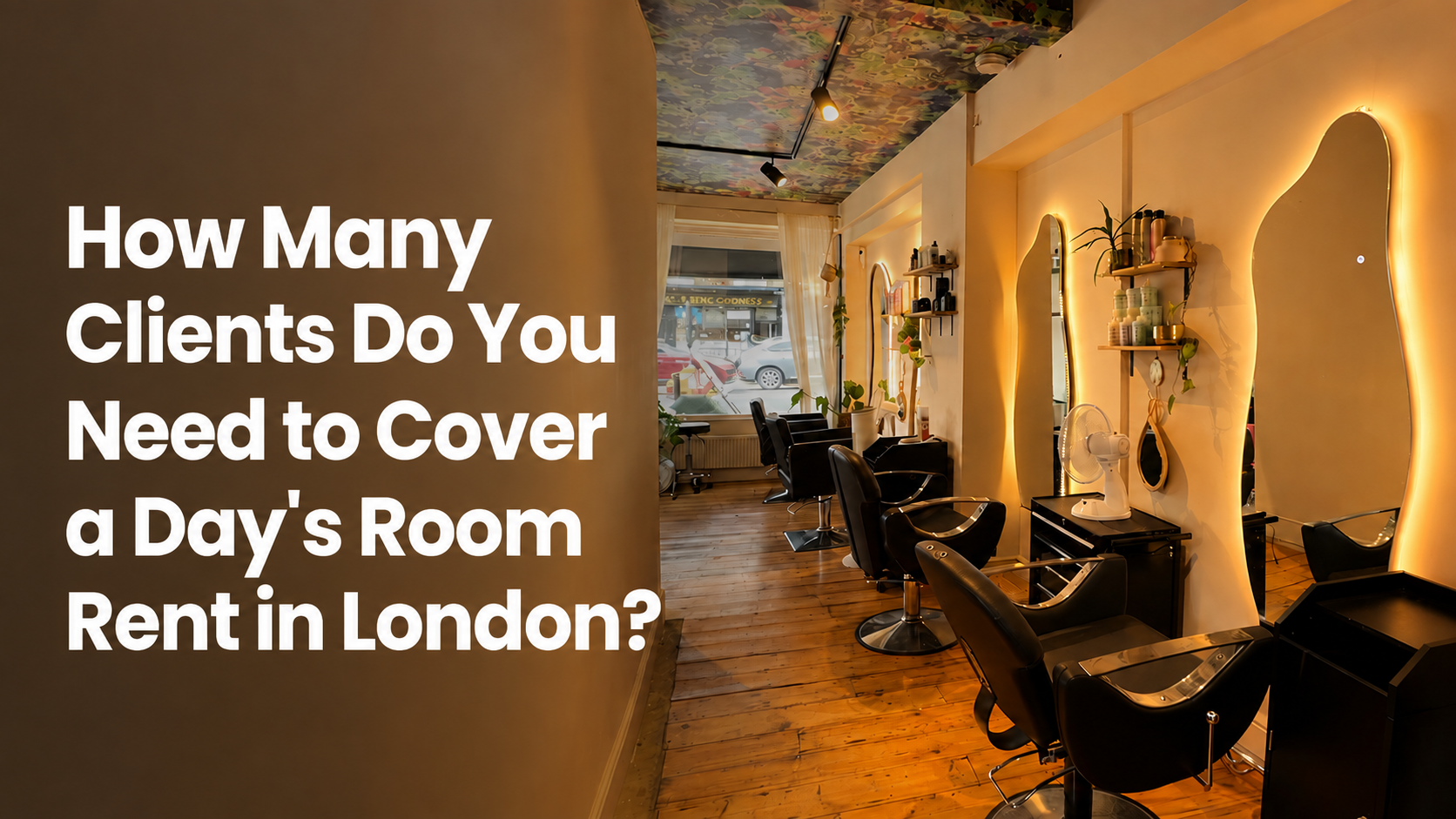
Most people going independent get the maths backwards. They look at a day rate, compare it to their salary, and hesitate.
The right question is much simpler: how many clients does it take to cover the room?
Once you run that number, the decision usually makes itself. Below are current London rates from live listings, and what they actually mean for a working day.
Barber and hair: break-even is client two
A barber chair in Morden rents at £50 a day. A hairdresser chair in Fulham is £50 a day, and a hair chair in Angel sits at £100 a day for a more central position.
Take the £50 chair. A standard cut in most of London runs £25 to £35. That means your second client of the day covers the chair. Everything after that is yours, minus product.
A comfortable eight-client day at £30 is £240. Take off the £50 chair and you keep £190 for a day's work, with no rates bill, no deposit, no lease and no obligation to show up next Tuesday if you do not want to.
The £100 Angel chair looks like double the risk until you account for what central London does to your average ticket and your walk-in rate. At £45 a cut, you are still clear by client three.
The rule that matters: compare the day rate to your average ticket, not to your salary. The ratio is what tells you whether the room works.
Nails and beauty: the first two appointments
A beauty room in Fulham is £60 a day. A manicure station is £60, and a nail desk in Angel is £100.
Gel manicures across London typically run £30 to £45. Extensions and nail art push higher. On a £60 room at £35 a set, you are even after two clients — usually before 11am.
Six appointments at £35 is £210, leaving £150 after the room. Push the ticket to £45 with add-ons and the same six clients return £210 net on the same £60 cost. That is the leverage point: your room cost is fixed for the day, so every increase in average ticket falls almost entirely to you.
Browse what is currently available in beauty and cosmetics.
Treatment rooms: you are profitable inside the first hour
Clinical and treatment space in London is priced hourly rather than daily, which changes the maths in your favour. A fully equipped treatment room, a room at Bouverie Place in Paddington and a premium room in central London all sit around £28.50 an hour.
A 60-minute facial at £70, a massage at £75, a consultation and treatment at £120 — in every case the first client of the day clears the room cost and returns a margin. You never carry an unprofitable hour, because you only book the hours you have already sold.
Four clients at £75 across four hours is £300 revenue against £114 of room cost. £186 net, for a half day, with no fixed overhead attached to the days you do not work.
See treatment rooms and medical and clinical space.
Fitness and studio: the session-cost model
A studio in Muswell Hill suitable for yoga, Pilates and small-group work is £20 an hour. A studio room in the same area is £15.
For a personal trainer charging £50 to £70 a session, the room costs roughly a quarter of one client hour. For group work the economics get dramatically better: eight people at £15 a head is £120 against £20 of room cost. Run three classes a week and the space cost is close to noise.
Content creators face the same arithmetic. An empty content creator room or studio space booked for a three-hour shoot costs less than most creators spend on a single sponsored-post production — and produces a month of content.
Browse fitness spaces and content creator space.
When to move from hourly to daily to monthly
The three pricing tiers exist because three different businesses need them, and knowing which one you are is worth real money.
Book hourly while you are building. You pay only for hours already filled. Your cost scales exactly with your revenue and never runs ahead of it. This is the correct model for anyone in their first months independent, testing a new area, or adding a second location.
Move to daily when you consistently fill four or more hours. At £28.50 an hour, five booked hours is £142.50 — at which point a day rate is usually better value, and you gain the flexibility to run over without watching a clock.
Move to monthly when your diary is two-thirds full. Longer commitments carry materially lower effective rates, because the operator gains occupancy certainty and prices for it. This is normally the single largest cost reduction available to an established independent practitioner, and most people leave it far too late.
The mistake is not starting too small. It is staying hourly long after you have earned a better rate.
What you are not paying for
The day rate is the visible number. The invisible one is everything a lease would have added.
No deposit tying up working capital. No personal guarantee. No business rates. No fit-out cost. No service charge. No dilapidations at the end. No five-year commitment made on the strength of a client list you have not built yet.
That is the real arithmetic of flexible space: it converts a large fixed cost into a small variable one, and variable costs cannot bankrupt you in a quiet month.
Run your own number
Take your average ticket. Divide the day rate by it. That is how many clients you need before the room is paid for.
For almost every London practitioner, the answer is one, two or three — and the working day has eight hours in it.
Browse spaces available in London, or search across all categories to see live rates for your discipline. Every space is verified before it goes live, and payment is held securely until your booking completes.
If you already have a space with unused days in it, you can list it here — the same maths works in reverse.
Rates quoted are from live listings at the time of writing and vary by location, facilities and duration. Revenue figures are illustrative.
VenCome — Commercial Spaces Booked Simply. Follow on LinkedIn and Instagram.
Find your perfect commercial space
Browse offices, studios, meeting rooms and more across the UK.
Browse Spaces